Living With the Seasons: Connecting With Nature in the Perth Hills
We are used to dividing the year into four seasons.
Summer.
Autumn.
Winter.
Spring.
But when you spend enough time outside in the south-west of Western Australia, those four broad divisions do not always tell the whole story.
There are more subtle changes happening all around us.
Different flowers begin to appear.
Bird activity changes.
The winds shift.
Rain arrives and disappears.
The ground changes.
The light changes.
The bush tells us what season we are actually in if we slow down enough to notice.
At The Sound Temple, this awareness of seasonal change has become part of the way we experience the land around us.
Six seasons instead of four
For Noongar people, the Traditional Owners of south-west Western Australia, the year is recognised through six seasons: Birak, Bunuru, Djeran, Makuru, Djilba and Kambarang.
These seasons are connected to what is actually happening in the natural environment rather than being determined only by a date on the calendar. Changes in weather, plants, animals and food sources traditionally helped indicate the movement from one season into another. GESB
That way of understanding time asks us to pay attention.
Not just to the month.
But to Country.
The six Noongar seasons
The six seasons are often broadly described as:
Birak — the first summer, traditionally around December and January.
Bunuru — the hottest part of the year, generally February and March.
Djeran — the beginning of cooler weather through April and May.
Makuru — the coldest and wettest period, generally June and July.
Djilba — a transitional season through August and September, when warmer days begin to mix with cold, wet weather and the first wildflowers emerge.
Kambarang — October and November, when the weather warms and wildflowers become increasingly abundant. GESB
These month ranges are useful as a guide, but one of the most interesting things about a seasonal system based on nature is that the environment itself provides the signals.
Nature does not check the calendar before changing.
Learning to notice where we live
At The Sound Temple, we sit amongst five acres of jarrah bush near Sawyers Valley in the Perth Hills.
When you spend years in the same place, seasonal changes become familiar.
You begin to recognise what happens after the first rains.
You notice when the creeks begin flowing again.
You see particular flowers return.
Birds become more or less active.
The ground changes from dry and dusty to soft and damp.
Then, before long, it changes again.
The more you notice, the more you notice.
This is one of the things we love about living and working closely with nature.
Our connection with the six seasons
The six Noongar seasons have been part of The Sound Temple story for many years.
Our logo and branding were intentionally designed to reflect and celebrate Birak, Bunuru, Djeran, Makuru, Djilba and Kambarang. The property was also gifted the Noongar name Yunga Karak Boodja by respected Noongar Elder Dr Noel Nannup, who has been an important cultural guide, storyteller and mentor within The Sound Temple story. The Sound Temple
For us, acknowledging the seasons is not about claiming Noongar cultural knowledge as our own.
It is about recognising that we live and gather on Country with an extraordinarily old and detailed understanding of the natural world, and continuing to listen to the people who hold that knowledge.
Seasonal living does not have to be complicated
Living with the seasons can sound like another lifestyle trend, but it can be much simpler than that.
It may simply mean noticing what is happening outside.
Eating foods that are naturally abundant at that time of year.
Adjusting our routines as the days become longer or shorter.
Spending more time outdoors when the weather invites us to.
Resting more when winter arrives.
Seasonal living is really about allowing our environment to influence us rather than expecting every day of the year to look exactly the same.
We have seasons too
Nature changes constantly, yet we often expect ourselves to operate at the same speed every day.
The same energy.
The same productivity.
The same motivation.
But people have seasons too.
There are times when we feel energetic and expansive.
Other times we need to withdraw.
Sometimes we are creating something new.
Sometimes something has ended and we need time before the next thing begins.
The natural world reminds us that none of these states lasts forever.
Growth is followed by rest.
Flowers fall.
Seeds form.
Rain comes.
The ground dries.
Then the cycle begins again.
New Moon, Full Moon and seasonal gatherings
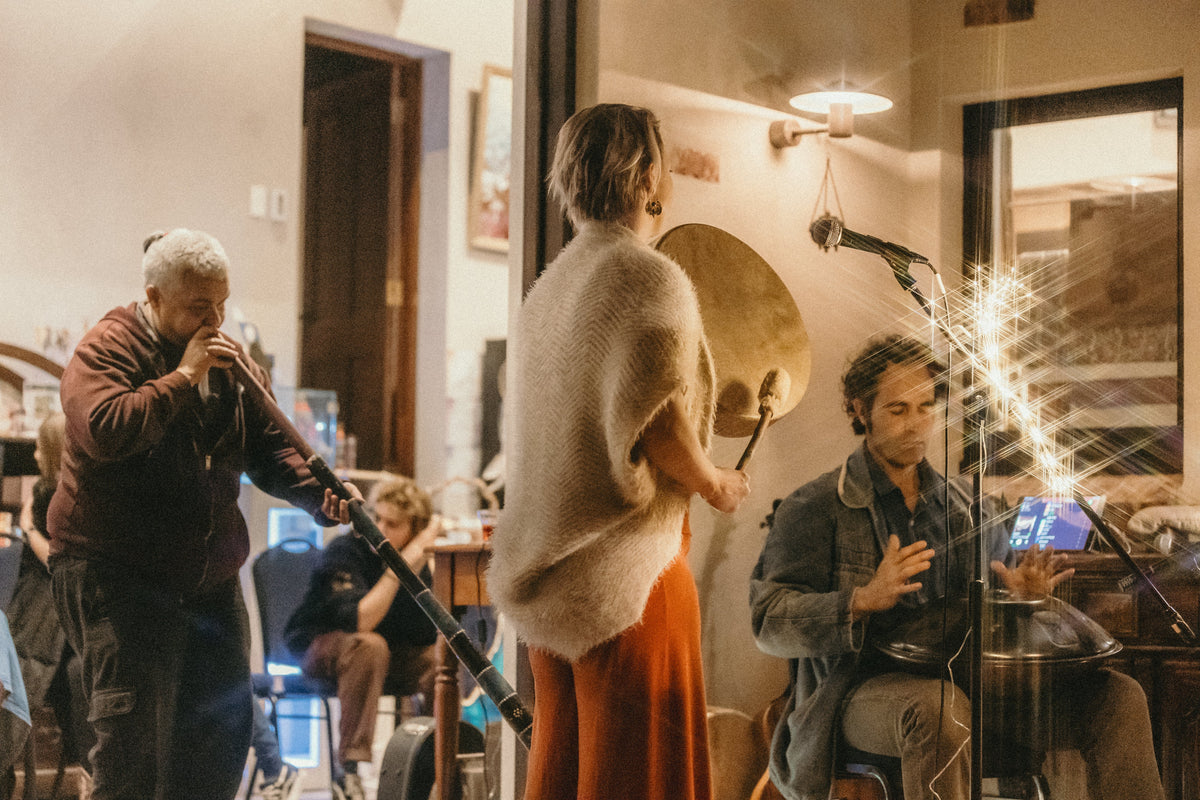
This awareness of cycles also sits naturally beside many of the gatherings we hold at The Sound Temple.
Our New Moon sessions often focus on beginnings and setting intentions.
Full Moon gatherings may invite reflection and letting go.
Our Equinox and Solstice events acknowledge larger turning points in the year.
These practices come from different traditions, but they share a common thread.
They give us a reason to pause and notice change.
Modern life moves quickly enough that an entire season can sometimes pass before we realise it.
Creating moments throughout the year where we consciously stop can help us reconnect with where we are.
What season are you actually in?
This can be an interesting question to ask without looking at a calendar.
Step outside.
What is flowering?
What birds can you hear?
Is the ground wet or dry?
Where is the sun sitting?
What direction is the wind coming from?
What is different from a month ago?
You do not need to know the name of every plant or bird.
Attention comes first.
Knowledge can follow.
The bush around The Sound Temple
The natural environment around The Sound Temple is constantly changing.
Makuru can bring rain, cold mornings and flowing water through the landscape.
Djilba begins to bring new growth and flowers while still surprising us with cold, wet days.
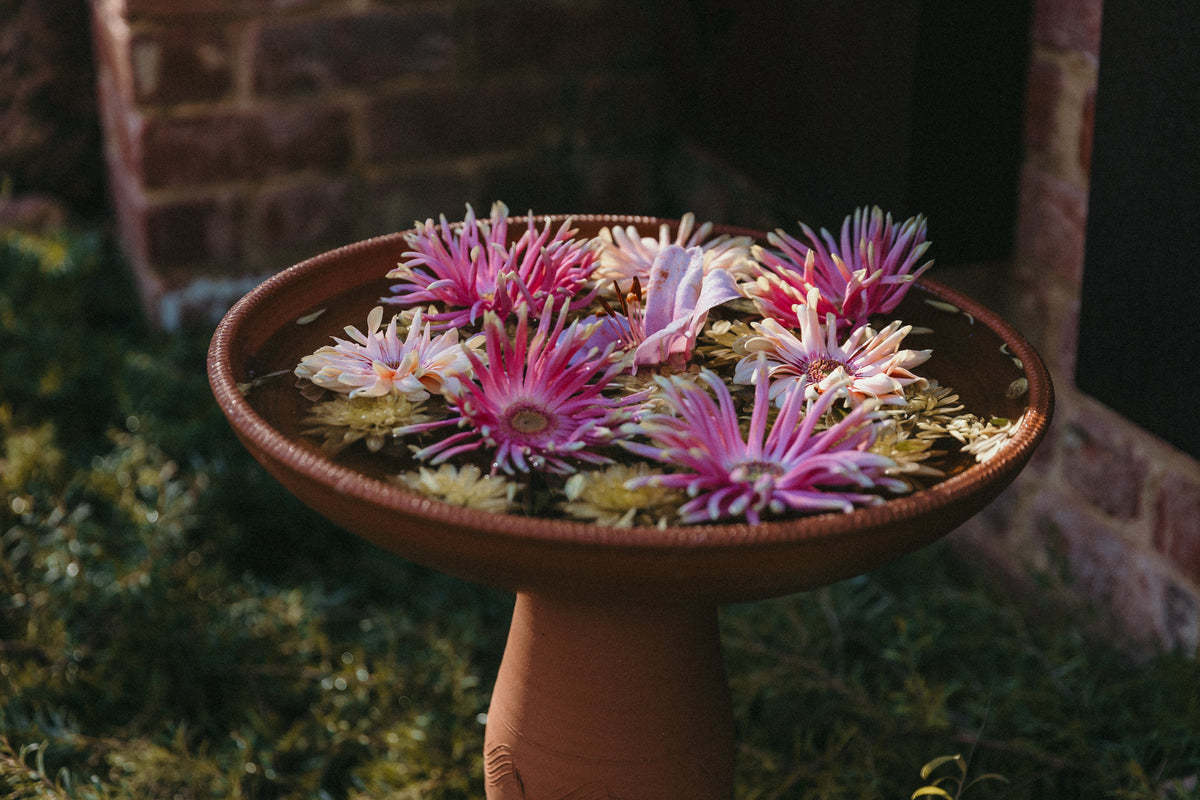
By Kambarang, the bush becomes increasingly alive with colour as the weather warms.
Later, Birak and Bunuru bring dry heat and a completely different feeling to the land.
The building stays in the same place.
But the experience of being here never really does.
That is part of its beauty.
Nature does not rush
There is another quiet lesson sitting underneath all of this.
Nature does not appear to rush because a deadline is approaching.
A flower opens when the conditions are right.
Rain comes when it comes.
A tree grows at its own pace.
Of course, human life does not work quite that simply.
We have jobs, families and responsibilities.
But perhaps paying closer attention to natural cycles gives us permission to question the expectation that we must always be pushing forward.
Sometimes the season is asking us to grow.
Sometimes it is asking us to rest.
Coming back to place
For more than a decade, The Sound Temple has been shaped by sound, community, creativity and the jarrah bush that surrounds us.
The land is not simply where the building happens to sit.
It influences the experience.
It reminds us that everything moves in cycles.
Weather.
Sound.
People.
Community.
Growth.
Rest.
Beginning again.
Perhaps living with the seasons begins there.
Not with trying to memorise a calendar.
But by stepping outside often enough to recognise when something has changed.
The more closely we pay attention to nature, the more connected we become to the place where we actually live.